Pages

Monday, June 24, 2013

CYANOBACTERIA (RED SLIME ALGAE) AND METHODS TO COMBAT IT

CYANOBACTERIA (RED SLIME ALGAE) AND METHODS TO COMBAT IT
by Orphek

Cyanobacteria are the bane of all marine aquarists and at sometime, most every aquarist will experience this dreaded bacteria.  Cyano can appear in different colors depending on the specie that may develop.  The term Red Slime Algae isn’t necessarily true; it can be blue, blue/green, purple, etc. depending on the specie.  Cyano, if present in large colonies can affect both the fishes and coral’s health.  Cyano generally appears when aquarists slack off in maintenance because “everything looks good”.

There are many factors that contribute to Cyanobacteria; light, excess nutrients, and poor water flow.  When these conditions are present, Cyano can develop and when it starts, it can spread rather fast.

Light:  Poor lighting in terms of intensity and correct spectrum is one contributor to cyano growth.  It has been proven that intense light of the proper spectrum hinders Cyano growth since it prefers lower light intensity and a poor spectrum.  The chart below shows Cyano adsorption rates of different species and how they react to a particular spectrum.  Orphek LED lighting products are all designed to inhibit Cyano growth by providing high intensity output and using the spectrum that is most beneficial to corals or other photosynthetic invertebrates.

CYANOBACTERIA (RED SLIME ALGAE) AND METHODS TO COMBAT IT


Nutrients:  Excess nutrients are another contributor of Cyano growth.  It can be in the form of excess food, fish waste, and dissolved nutrients.  An overrated quality protein skimmer is recommended to reduce excess nutrients.  Quality activated carbon is also very useful as it will remove contaminants that a protein skimmer will not remove from the water.

Water Flow:  Poor water flow creates stagnant areas in the tank where Cyano spores are allowed to settle and start growth.  Total water flow, including power heads, should be at least 10 times the volume of your tank.  Wavemakers or smart pumps are highly recommended.  The goal is not to let suspended food or waste settle but to keep it in suspension so it can enter the sump and be filtered out by chemical or mechanical means.

Combating Cyano:  The three contributors listed above must be addressed and corrected as a first step in eliminating Cyano.  There are also products available said to kill Cyano and one such product is Ultra Life’s Red Slime Remover but there are similar products that will have the same effect.

A word of caution when using any of these products; Erythromycin or a similar antibacterial medication is used in these products.  Since Cyano is bacterium and not algae, the medication attacks the bacteria.  The downside is that the medication is not selective; it will kill both good and bad bacteria.  Your corals may lose color and stop growing until the treatment period is over so caution and a careful eye is advised.  

Before you begin dosing, it is a good idea to do a water change and suck out as much Cyano as you can.  
It is highly recommended that you follow the instructions to a tee and not eliminate any step.  Be as accurate as possible in determining the dosing level you require.  Under dosing has little to no effect and overdosing can be disastrous to invertebrates. For best results it is imperative that the three contributors listed above be corrected before dosing any medication.  If this is not corrected first, the Cyano will return shortly after the medication period is over.  It makes no sense to dose first, then correct the problem later.  Doing so will require you to do another dosing period which puts further stress on your livestock.


Orphek does not endorse or guarantee that any of the Cyano removing products will be effective and safe for your system.

IMPRESSIVE MONTI GROWTH WITH ATLANTIK LED PENDANT

Wei Cher Lee, who owns and operates an aquarium shop in Malaysia recently shared  a few photos of his 48”x24”x24” display tank in his store.

Aquarium  in Malaysia with Orphek PR72 LED

Aquarium  in Malaysia with Orphek PR 72 LED light

Aquarium shop in Malaysia with Orphek Atlantik LED

IMPRESSIVE MONTI GROWTH WITH ATLANTIK LED PENDANT

IMPRESSIVE MONTI GROWTH WITH ATLANTIK LED PENDANT

Aquarium  in Malaysia with Orphek PR 72 LED light


Lee states that he has been using our Atlantik LED Pendant over this display tank for two months and his Monti growth in the display tank has been truly impressive. 

Lee switched from two PR72 Reef Pendants to one Atlantik.  One Atlantik provided plenty of coverage for this tank where other brands of LED pendants may require two to three units to get the same coverage.

Lee is very happy what the Atlantik has done for his corals.  Lee’s shop is:

Akuarium Batu Karang Laut Sdn Bhd

39 Jalan SS15/4E,
Subang Jaya 47500
Selangor, Malaysia
Phone : +603 5633 1743
Fax : +603 5633 1858

http://www.facebook.com/btkarang

Sunday, June 16, 2013

USA residents, give us a call today free of charge. Toll-free 800-398-6775

Monday, June 10, 2013

PIETER´s 6 Meter is a GORGEOUS 20 FOOT LONG REEF DISPLAY

ORPHEK CLIENT CHOOSES ORPHEK LED LIGHTING FOR HIS GORGEOUS 20 FOOT LONG REEF DISPLAY

The owner of this remarkable reef aquarium resides in the Netherlands and is well known among many reef aquarists for his huge 20 foot long reef aquarium.

Our client definitely wanted to cut his energy and maintenance cost that his previous metal halide system produced.  He was previously using 6, 400 watt HQI, 14,000K lamps, 3, 1000 watt HQI, 14,000K, and 4, 140 watt actinic 03 fluorescent lamps.

This used 5.8 kilowatts of power per hour.  Our client then installed 16, DIF 100 pendants and at a later date switched to our Atlantiks because of their versatility and ability to program individual channels to suit his needs.  Based on energy use in the US, the yearly savings in energy would amount to $2,250.00.

Orphek Atlantik In action

He was not going to trust just any brand of LED lighting to provide thousands of dollars worth of corals their photosynthetic needs.  He wanted LED lighting that was going to be capable of providing the intensity, ability to penetrate deep tanks, and most importantly, the correct spectrum that is required for good coral growth.  After much research and recommendation by Aquacompleet, He chose Orphek LED lighting for his gorgeous display.


The owner’s massive aquarium is controlled by electronics in a separate relay cabinet which includes motor starters for the large water pumps, heaters, and other components and has circuit breaker protection for all components connected to it.

Orphek is pleased to be a part of this system and with the owner’s knowledge of corals and their needs; it can only help us design even more improvements into our LED systems.  Orphek would like to thank Pieter (owner), Tanne, and Arie (Aquacompleet) for their effort as all had a huge hand in getting this system to its present state.  We especially would like to thank Tanne for filming the video and sharing it with us.  Arie is the owner of Aquacompleet, one of the nicest fish stores in the Netherlands.  Aquacompleet is located at:

Aquacompleet  (Van Beethovensingel 32 , 3055 JK Rotterdam)

Friday, June 7, 2013

ORPHEK TO BE AT THE MIDWESTERN CORAL FARMERS MARKET

Orphek will be displaying and demonstrating their high technology LED Pendants at the Midwestern Coral Farmers Market Event.

This is their first annual event and should be a huge success.
Stop by our booth and let us demonstrate our new Atlantik as well as our DIF100 and PR72 Pendants, all of which will surely please you.

Live PAR testing will also be taking place on all models so please make it a point to stop in and say hello , and see what Orphek can do for you.  You will be glad you did.

2013 Midwestern Coral Farmers Market


2013 Midwestern Coral Farmers Market SM

Presented by D.I.Y. Acrylics and

the Coral Farmers MarketSM

First Annual Summer Event

Free Admission to the Public !

Saturday, June 8th, 2013

Doors Open to Public 10:00 AM to 5:00 PM

Wyndham Garden Dayton South

31 Prestige Plaza Drive, Miamisburg, OH 45342

This 2013 Midwestern Coral Farmers Market  event is the first annual event run by the combined efforts of D.I.Y. Acrylics and the Coral Farmers Market SM companies.

The Coral Farmers Market SM brings and supports some of the best coral farming vendors and aquarist within the US. D.I.Y. Acrylics provides local infrastructure and support for this Midwestern Dayton Ohio location.

We anticipate a strong regional attendance from Dayton, Indianapolis, Cincinnati and Columbus.

This event is opened up to the entire captive reef industry. Coral farmers will include aquarists, retail reef shops, online coral shops and full scale coral farming enterprises.

There will also be exhibitors present who will be demonstrating and selling their physical products. This MW-CFM event will also feature coral auctions, raffles and door prizes.

Reef aquarists new to the captive reef market can also expect to see a fine collection of easy to keep beginner corals. We are also encouraging our farmers to bring plenty of farmed soft corals along with their exotic farmed stony corals.

Many vendors will be running coral show specials and MW-CFM discounts.

Sunday, May 19, 2013

UNDERSTANDING SPECTROGRAPHS AND CHROMATICITY GRAPHS

UNDERSTANDING SPECTROGRAPHS AND CHROMATICITY GRAPHS

Our eyes have photoreceptors that sense different wavelengths representing colors.  They are sensitive to short, medium, and high nanometer wavelengths (420-440, 530-540, and 560-580).  Corals also have similar receptors and positively react to intensity and wavelengths in the PUR spectrum which is 400-550 and 620-700nm.
SPECTROGRAPHS AND CHROMATICITY GRAPHS
CHROMATICITY Char

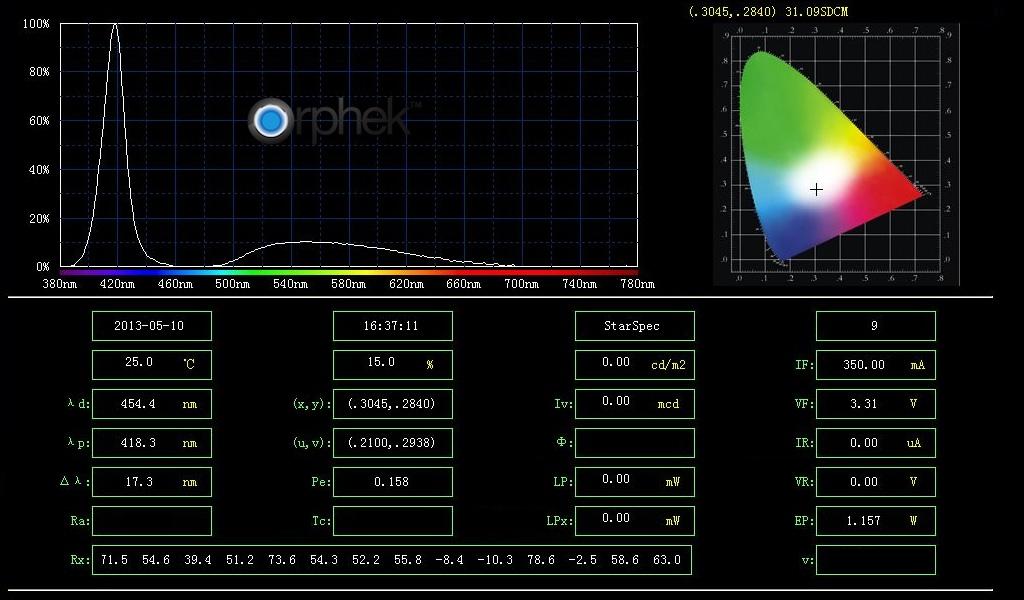
Orphek’s design team uses spectrographs generated by a spectrometer and most importantly, a CIE RGB color chromaticity chart.  This chart maps a range of physically produced colors as well as the intensity of the colors.  Without a chromaticity chart or map, a spectrograph alone is not useful.  Orphek uses both for a meaningful report of their LEDs ability to produce light corals positively respond to.

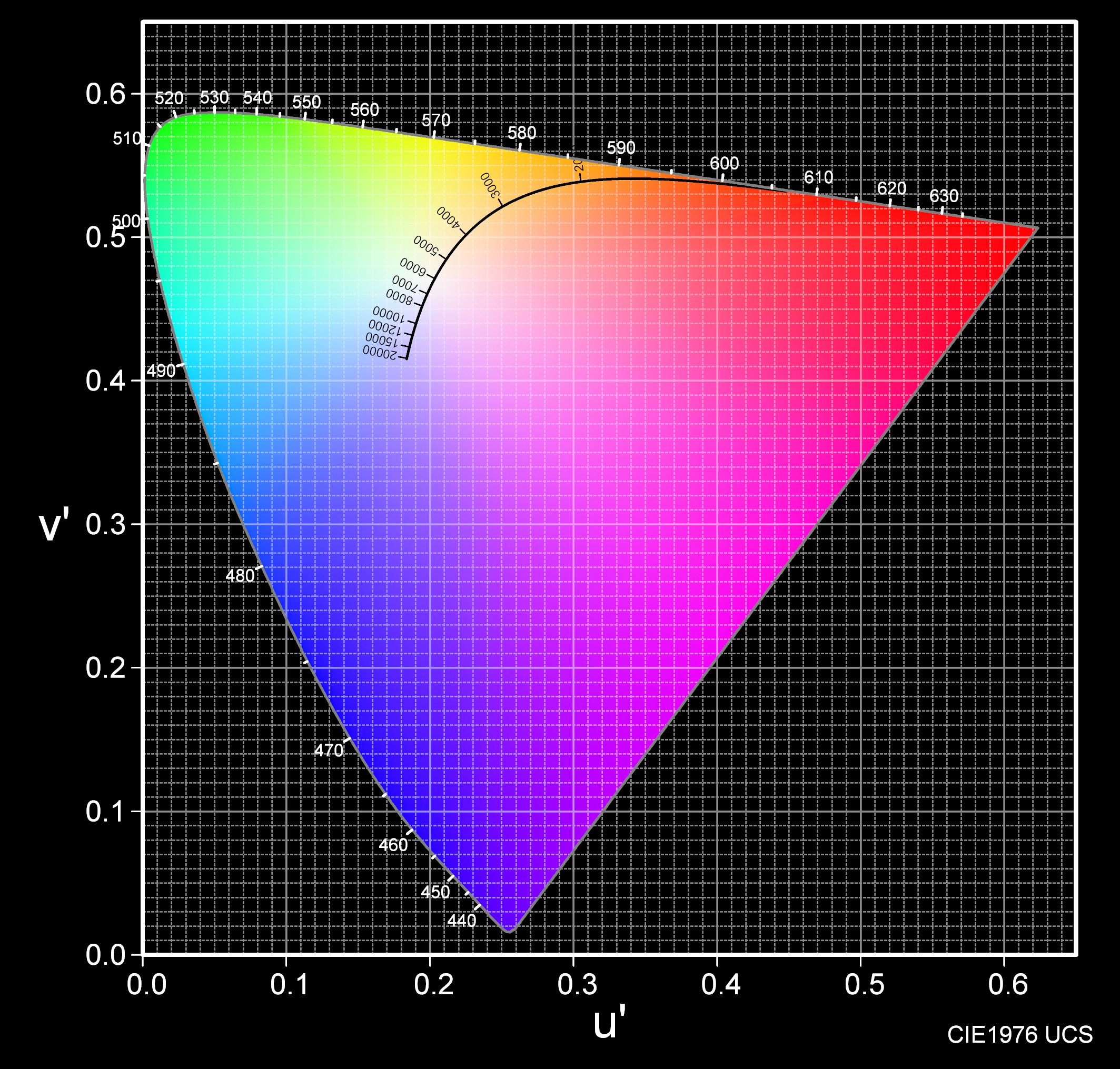
The chromaticity chart maps a full plot of all visible colors and is divided into two parts; brightness and chromaticity   The color white is considered a bright color while grey is generally considered to be a less bright version of that same white.

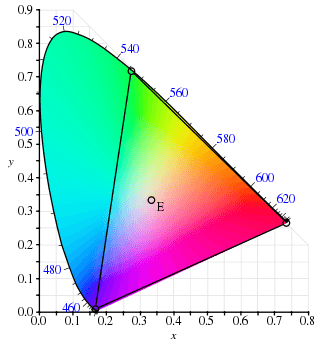
The CIE XYZ RGB color space is designed and read so that the “Y” parameter is a measure of brightness or luminance of a color.  X is a mix (a linear combination) of cone response curves. The chromaticity of a color is then specified by the parameters x and y.   If you choose any two points of color on the chromaticity chart, then all the colors that lie in a straight line between the two points can be formed by mixing these two colors.  The total amount of colors must be convex in shape and all the colors that can be formed by mixing these sources are found inside the triangle which is formed by the source points as shown below.

Chromacity chart

If one chooses any two points of color on the chromaticity diagram, then all the colors that lie in a straight line between the two points can be formed by mixing these two colors. It follows that the gamut of colors must be convex in shape. All colors that can be formed by mixing three sources are found inside the triangle formed by the source points on the chromaticity diagram.


As you can see by Orphek’s  CHROMATICITY chart of their LEDs, all colors needed by colors are formed as well as the intensity required for good growth.
orphek white led V5.JPG
orphek white UV led

orphek-white-led-v5-2

It is very important when choosing LED lights for your reef tank to view the manufacturer’s spectrograph as well as their CHROMATICITY chart on their product.  It is equally important to see if any there is any change in the spectrum when dimming the LEDs.  Changing spectrum in a dimming mode is not good for corals and Orphek LED technology maintains the spectrum in the dimming mode.

MACNA 2013

MACNA 2013

macna 2013

Orphek will be attending and sponsoring MACNA 2013 which takes place from August 30 to September 1st at the beautiful and luxurious Westin Diplomat Hotel located in Miami Beach, FLA.

macna 2013 Diplomat Hotel

Orphek will display their latest products in a premium double booth (419) which will be located in the Great Hall 3-6.

Stop by and say hello to the Orphek crew and let us demonstrate what Orphek LED Lighting can do for your corals.

Orphek will also have their spectrometer on hand and give live demonstrations showing the spectrum that Orphek LED Lighting can produce for your corals.  This is something you do not want to miss.

Thursday, May 9, 2013

MAGNESIUM Mg AND ITS ROLE IN THE REEF AQUARIUM

MAGNESIUM (Mg) AND ITS ROLE IN THE REEF AQUARIUM

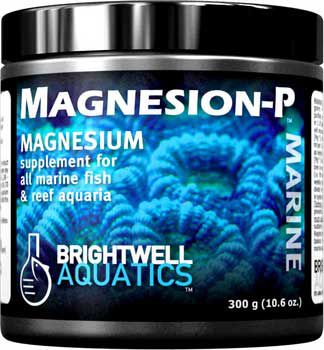
Magnesium ranks fifth of the eight major elements in seawater while the remaining elements are considered trace elements.  The chart below will obviously explain the importance of magnesium supplements in our marine aquariums, whether it be reef or fish only.

at 3.5% salinity
Element
Hydrogen H2O
Oxygen H2O
Sodium NaCl
Chlorine NaCl
Magnesium Mg
Sulfur S
Potassium K
Calcium Ca
Bromine Br
At.weight
1.00797
15.9994
22.9898
35.453
24.312
32.064
39.102
40.08
79.909
ppm
110,000
883,000
10,800
19,400
1,290
904
392
411
67.3
Element
Molybdenum Mo
Ruthenium Ru
Rhodium Rh
Palladium Pd
Argentum (silver) Ag
Cadmium Cd
Indium In
Stannum (tin) Sn
Antimony Sb
At.weight
0.09594
101.07
102.905
106.4
107.870
112.4
114.82
118.69
121.75
ppm
0.01
0.0000007
.
.
0.00028
0.00011
.
0.00081
0.00033
Helium He
Lithium Li
Beryllium Be
Boron B
Carbon C
Nitrogen ion
Fluorine F
Neon Ne
Aluminium Al
Silicon Si
Phosphorus P
Argon Ar
Scandium Sc
Titanium Ti
Vanadium V
Chromium Cr
Manganese Mn
Ferrum (Iron) Fe
Cobalt Co
Nickel Ni
4.0026
6.939
9.0133
10.811
12.011
14.007
18.998
20.183
26.982
28.086
30.974
39.948
44.956
47.90
50.942
51.996
54.938
55.847
58.933
58.71
0.0000072
0.170
0.0000006
4.450
28.0
15.5
13
0.00012
0.001
2.9
0.088
0.450
<0.000004
0.001
0.0019
0.0002
0.0004
0.0034
0.00039
0.0066
Tellurium Te
Iodine I
Xenon Xe
Cesium Cs
Barium Ba
Lanthanum La
Cerium Ce
Praesodymium Pr
Neodymium Nd
Samarium Sm
Europium Eu
Gadolinium Gd
Terbium Tb
Dysprosium Dy
Holmium Ho
Erbium Er
Thulium Tm
Ytterbium Yb
Lutetium Lu
Hafnium Hf
127.6
166.904
131.30
132.905
137.34
138.91
140.12
140.907
144.24
150.35
151.96
157.25
158.924
162.50
164.930
167.26
168.934
173.04
174.97
178.49
.
0.064
0.000047
0.0003
0.021
0.0000029
0.0000012
0.00000064
0.0000028
0.00000045
0.0000013
0.0000007
0.00000014
0.00000091
0.00000022
0.00000087
0.00000017
0.00000082
0.00000015
<0.000008


MAGNESIUM (Mg)

Science/Rationale/Use
In addition to magnesium’s biological functions, especially in the skeleton forming process of stony corals and other invertebrates, it also plays a significant role in preventing excessive precipitation of calcium and bicarbonate.  Depleted levels of magnesium (under 800ppm) can cause low pH and an inability to maintain proper calcium levels.

How much magnesium do corals (and Coralline algae for that matter) absorb?

Farley states that corals in the ocean can incorporate between 0.1% and 3.5% by weight.  Coralline algae also incorporates a considerable amount, typically more than 1%, and as high as 4.4% by weight.  There are few data on coral skeletons in aquaria, but the magnesium content is not expected to be significantly different from this range. (Randy Holmes-Farley, Ph.D.)

Hopefully, this will explain why magnesium dosing is just as important as calcium dosing in reef aquariums because without maintaining magnesium level at the proper level, the calcium availability will suffer along with your calcium loving invertebrates.  It is interesting to note that some medications used to treat some  human diseases such as Osteoporosis contain calcium, and it is interesting to note that magnesium in these medications are at the same 3 to 1 ratio.

Dosing

Magnesium and calcium should be kept at a 3 to 1 ratio, much the same as found on the reefs.  Low magnesium can have an adverse effect on an animal’s ability to absorb available calcium.  If kept in balance, 420ppm of calcium and 1280ppm of magnesium, the entire 420ppm of calcium will be available to calcium loving animals.  Should the magnesium levels lower, so will the available calcium even if it does measure 420ppm with your test kit.  An example would be that with 640ppm of magnesium available, only 210ppm of calcium would be available to the animals to absorb.  Whatever you choose to keep your calcium level at, multiply this by three to find the amount of magnesium needed to make your entire level of calcium available.  By the same token, dividing the magnesium level by three will give you the amount of calcium available to the animals providing the calcium is maintained at 400-420ppm.

Most systems will require small doses two to three times per week depending on the density of your stony coral population.

There are some manufacturers that add magnesium to their calcium supplements.  Seachem adds magnesium to Reef Complete and Reef Advantage Calcium, but not to their other calcium products.  Testing will be required to determine if there is enough magnesium present in these products to satisfy the magnesium level in your system.

Always choose supplements from reputable manufacturers to ensure that the purity of the product is maintained.  If one brand is markedly cheaper than another, beware.

Testing/Test Kits

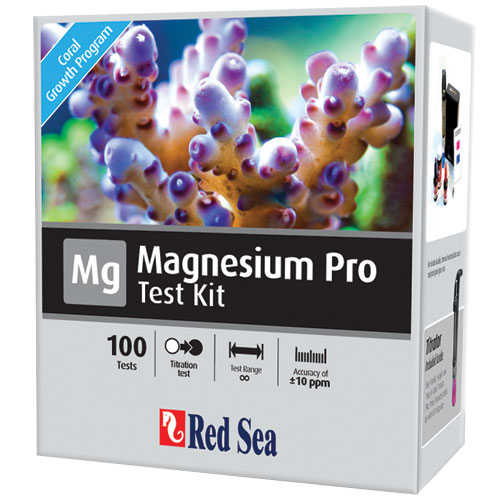
Initially, frequent magnesium testing should be carried out until you can determine the dose amount and frequency of dosing.  Most, if not all test kits for magnesium will use the titration method which will give accurate enough readings for our purpose.  The average shelf life for reagents is generally a year and most manufacturers will have a manufacturing date stamped somewhere on the box.  For this reason it is better to purchase your test kits from a source that has a high turnover rate which will ensure freshness of the reagents. There are many good magnesium test kits available, and again, buy from a reputable manufacturer.  Salifert, Seachem, and the newer Red Sea Pro Test Kits are all very good kits.


MAGNESIUM (Mg) TestingTest Kits

Other Sources of Magnesium Supplements 

Epsom salts (USP grade magnesium sulfate heptaydrate) has been and is being used by some aquarists because it is fairly inexpensive and readily available in drug stores.  The problem with using Epsom salts is that if this product is used to raise magnesium by a significant amount, the water would be enriched with sulphate so do not consider this as an ideal long term supplement.

Another DIY supplement to avoid is magnesium chloride commonly sold as deicer and labeled as MAG Flake.  Quality levels of this product are not maintained by the manufacturer close enough for use in our aquariums.  They sometimes contain ammonia which is something we definitely do not want in our systems.

Interactions/Troubles/Fixing

Kalkwasser dosing is one of the main causes of magnesium deficiency as it precipitates magnesium as magnesium hydroxide while an abundance of carbonates precipitate it as magnesium carbonate (Farley).  In either of the above cases, this means that the magnesium which has precipitated is no longer available to the animals, at least for quite some time as magnesium hydroxide will never redissolve and magnesium carbonate will take an appreciable amount of time before it will go back into solution and be available to the animals.  It should be noted here that keeping dKH levels in the 7dKH range will help prevent precipitation of magnesium in the form of magnesium carbonate.  Kalkwasser dosing should be carried out with a very slow drip rate to minimize magnesium precipitation.

If your calcium and magnesium parameters are maintained and you feel your corals are not growing well, the culprit may be extended use of chelated calcium supplements.  Chelated calcium has a tendency to bond making it more difficult to take out of solution or be absorbed by the corals.  Most, if not all liquid calcium supplements are of the chelated form.  It is a good idea to read the makeup of the calcium supplement before purchasing so you will know which form of calcium is being used in the product.  If this is not present on the label, you may want to contact the manufacturer regarding the type of calcium that is used.

Low magnesium concentrations will not affect the calcium readings on test kits but will affect the calcium absorption process of corals and other calcium loving animals.

Significantly high magnesium levels can have potentially detrimental biological effects on some animals. Weekly magnesium testing should be carried out to prevent this from occurring.

Sunday, May 5, 2013

PROTEIN SKIMMING AN IMPORTANT TOOL FOR A SUCCESSFUL REEF AQUARIUM

PROTEIN SKIMMING AN IMPORTANT TOOL FOR A SUCCESSFUL REEF AQUARIUM

There are four main ingredients required to have a successful reef aquarium.

  • Biological filtration

  • Protein Skimming

  • Lighting of the proper intensity and spectrum such as that provided by all Orphek LED reef lighting products.

  • A good grade of salt with emphasis on calcium, magnesium, and trace elements.


Next to biological filtration, protein skimming or foam fractionation is the most important tool for any healthy marine aquarium, whether it be a fish only, or a reef aquarium.

Carbon filtration does not remove all organics present in sea water.  Phenol oils and other organics that cause yellowing of the water which reduce the redox value of the aquarium water.

This can only be completely removed by a good, well designed protein skimmer that can turn over the tank volume at least once per hour.

Reef aquariums that contain a high level of phosphates and nitrates fuel the growth of nuisance algae which can cover the entire tank and choke out corals and other sessile invertebrates and spell an early demise for these animals.

A proper light spectrum can also aid in reducing nuisance algae growth by not using spectrums in the green and yellow band which promote this unwanted algae growth.  Orphek LED lighting does not use green or yellow LEDs in their systems for this reason and that corals do not require or use green or yellow lighting for photosynthesis.

A properly sized and efficient protein skimmer can nearly duplicate conditions found on the reef where nitrates and phosphates are extremely low.

There are many technologies used in skimmers such as counter current, downdraft, and ETS (Environmental Tower Skimmers.  All work quite well but the counter current seems to be the favorite among reef hobbyists.

The counter current skimmer works by injecting large volumes of water and air that move horizontally in a circular fashion and are in continual contact with the fine micro bubbles to which the dissolved waste attach to.

The bubbles with the organics attached are slowly lifted into the waste collection cup and removed from the system. The keys to a good efficient skimmer are contact time, ability to produce very small bubbles, and the ability to process large amounts of water per hour.

When choosing a protein skimmer, do not buy a model that is just rated for your tank size.  It is much better to buy a unit capable of skimming a tank at least one and a half times the volume of your aquarium.

Many companies will rate their skimmer’s tank capacities for fish only systems where reef systems can nearly double the waste output as compared to a fish only system.  This in part is due to liquid coral foods that are never completely absorbed by the inhabitants of the aquarium.  So it is better to initially invest a little more money at first then have to buy the skimmer you should have bought in the first place.

It is very important in terms of efficiency to clean the waste tower of the brown film at least once a week.

Failure to do so will result in many of the waste bubbles breaking prematurely before being deposited into the collection cup thus reducing the skimmers efficiency.  It is also important that the skimmer be easy to service.

Hard to service skimmers usually result in infrequent cleanings which make the skimmer much less productive.

It is important to note again, that lighting of the proper spectrum such as Orphek LED systems provide, can also aid in reducing nuisance algae.  Orphek has proven this in actual lab experiments, not just by merely stating this fact.

Wednesday, May 1, 2013

CORAL FEEDING

CORAL FEEDING FOR HEALTHY CORALS AND CORAL COLOR

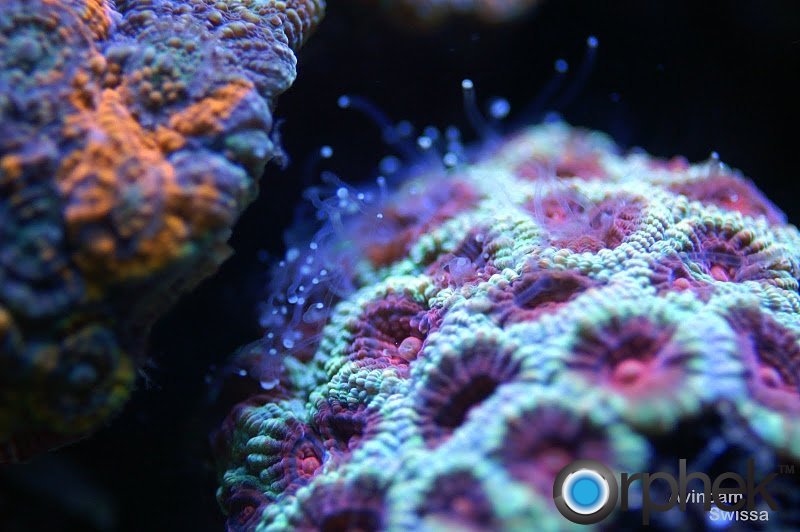
Corals are marine organisms that consist of numerous polyps and use these polyps for feeding.  Most corals feed on algae produced by sunlight and often called photosynthetic algae or zooxanthellae.  When kept in reef aquariums, the light required to produce enough algae to sustain the coral’s life is often insufficient.

Proper lighting such as that provided by all Orphek LED systems will provide the required light as well as the necessary spectrum of light.

Coral feeding

Feeding corals is often necessary if one wants healthy looking corals with well extended polyps.  Even if particular specie of coral does not require food, it is often beneficial to feed them sparingly.

It is important to research the corals you intend to buy or presently have so you are aware of what foods, if any, that they may require.  There are many species of stony corals that need very little supplemental feeding as most of their food source is provided by the zooxanthellae that reside in their body cavities.

Stony coral, or reef building corals are called hermatypic corals and require intense lighting.  Without sufficient light of the proper spectrum, the zooxanthellae algae cannot supply enough food for the coral to grow properly.

Coral feeding

Corals that require more supplemental foods, less light  and do not have reef building aragonite skeletons are referred to as ahermatypic corals.  Therefore it is important to provide the correct intensity and spectrum for all the corals you maintain.

Some corals such as the Orange Tube Coral (Tubastrea aurea) is an ahermatypic coral and can be difficult to maintain as they require low light, and each polyp must be individually fed, and fed at least once daily.  If you cannot provide this feeding regime, this coral should not be considered for your aquarium.

Coral feeding

Good coral foods are liquid Cyclopeeze, DT’s Phytoplankton, and Reef Pearls are some examples although there are many types available.

Corals require calcium, magnesium, and strontium to build skeletons.  These elements are considered the major elements.
FE, or iron is a useful minor element that increases growth of corals as their zooxanthellae algae feed on this iron thereby producing more food for the coral.  The iron must be in a form that is easily absorbed by the coral if it is to be effective.

Last, but not least are trace elements.  Trace elements are natural minerals that are present in low concentrations in seawater.  Many have essential functions in the biological process of corals.

Some trace elements are functions that are used to aid photosynthesis while others support the building process of calcareous skeletons.  The enzymes needed to do these processes cannot function properly without trace elements.  There are no substitutions for trace elements; they must be dosed as a balanced mixture.

Several companies produce these needed trace elements and some examples would be Tropic Marin’s Pro Coral K supplement, Prodibio’s Bioptim, and Seachem’s Trace.

To summarize:
  • Insure you have proper lighting for the corals you are keeping.  Orphek LED light technology easily provides this requirement and you can look no further.

  • Research your coral to determine what type, and how much food they require.

  • Feed corals only when the polyps are open and extended, preferably in the evening.  Use target feeders where or when necessary.

  • Do not overfeed, tank pollution will result.

  • Ensure a high quality protein skimmer is used to reduce pollution from uneaten or absorbed foods.

  • Dose trace elements according to the label instructions.